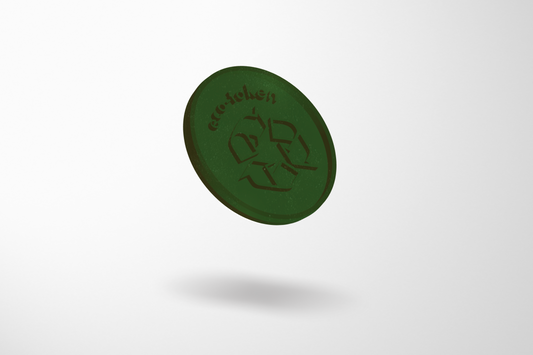
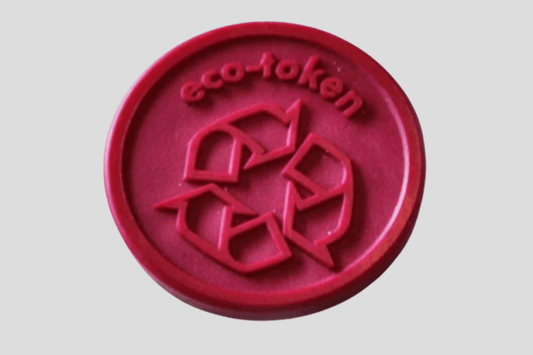
What are ECO tokens?
At their core, ECO tokens offer a wonderful alternative to traditional event currency, carefully manufactured from natural, bio-based polymers or recycled elements instead of virgin plastics. You will typically find that these tokens are crafted using plant starches extracted from agricultural waste, such as potato peels, or from polylactic acid (PLA) derived from fermented corn and sugarcane. We also offer variations incorporating cellulose sourced from wood pulp or cotton fibers, elegantly bound together with natural resins and beautifully colored using mineral pigments. When placed in the right environmental conditions—such as industrial composting facilities or specific microbial environments—the natural polymer chains within these tokens can be completely broken down by fungi and bacteria, leaving behind zero toxic chemical traces or microplastics.
ECO tokens as visible branding and event valuta
ECO tokens from JM Band® serve a dual purpose at your event: they function as robust, reliable valuta while reinforcing your visual identity at every point of interaction.
As a payment medium, ECO tokens streamline transactions at bars, food stands, cloakrooms, and activity areas. Fixed denominations help you shorten queues, reduce cash handling, and simplify reconciliation for vendors. Tokens can be color-coded by value, area, or day, making control and auditing far more efficient for your staff.
At the same time, each token is a miniature branding surface that guests handle repeatedly throughout the event. With your logo, event name, and key messages clearly printed or embossed, ECO tokens keep your brand literally in your visitors’ hands. Distinct shapes, colors, and edge designs help differentiate sponsors, VIP zones, or special campaigns while remaining consistent with your overall visual identity.
Because ECO tokens are made from plant-based or recycled materials, they also communicate your green profile in a highly visible way. When guests see and feel the difference from conventional plastic, your environmental commitment becomes tangible rather than just a statement on a poster.
Using JM Band®’s online design tools and 3D visualization, you can precisely align the look and feel of your ECO tokens with your wristbands, drink tickets, and other access media—creating a coherent, professional appearance across the entire event economy.
Materials used in our ECO tokens
As an event organizer, you can carefully select from several specific material compositions, with each offering distinct physical properties and fascinating manufacturing backgrounds. We believe that understanding the exact base ingredients will greatly assist you in choosing the perfect token for your practical event requirements.
Wood-based options
Our wood-based composite tokens are expertly manufactured from a dense blend of finely ground sawdust, wood flour, and refined wood fibers derived gracefully from timber processing byproducts. These cellulosic fillers are then combined with binding resins and compressed under high heat and pressure to create a highly uniform, exceptionally durable structure. The resulting material provides a wonderful level of rigidity and features a tactile, organic texture that closely mimics solid wood, all while cleverly preventing the shrinkage and warpage often associated with unfilled plastics.
Bioplastics and potato starch
Our bioplastic tokens are primarily formulated using natural plant starches, frequently sourced from agricultural waste like potato peels. During the industrial manufacturing process, raw potato starch is thoughtfully mixed with natural plasticizers, such as glycerol or sorbitol, alongside a small amount of water to beautifully reduce brittleness and allow the material to be perfectly shaped. Through mechanical extrusion and high heat, the crystalline structure of the starch is gently broken down and melted into a uniform thermoplastic resin, which is then precision injection-molded into the final token shape.
Recycled plastic compounds
Tokens crafted from recycled plastic compounds cleverly utilize reprocessed polymers that have been thoughtfully diverted from waste streams. These plastics are meticulously collected, cleaned, melted, and reformed into high-density resins highly suitable for precision injection molding. By utilizing these recycled thermoplastic compounds, the manufacturing process relies solely on existing polymer chains rather than extracting new petroleum-based resources. This results in a structurally robust material entirely capable of meeting the demanding needs of high-volume event environments, much like what you'd find with alternative plastic tokens solutions.
How to design your ECO tokens online
Creating customized event currency is a wonderfully straightforward process using our intuitive digital tools, requiring absolutely no prior graphic design experience or specialized software. Our online platform is neatly structured to gently guide you through each phase of token customization.
-
Selecting the base product: Begin by warmly choosing your preferred material composition, size, and base color for the tokens, ensuring the physical specifications perfectly align with the operational needs of your event.
-
Adding artwork and text: Easily upload your existing corporate logos, festival artwork, or custom graphics directly into our tool. You can also utilize our built-in text editors to seamlessly add specific denominations, event names, or helpful security numbering.
-
Reviewing the layout: Adjust the placement, scale, and alignment of all your visual elements within the designated print area. Our interface provides clear, helpful boundaries to ensure no essential information is ever cut off during the physical production process.
-
Confirming the order: Once your design accurately reflects your event's unique branding, you can confidently finalize the required quantity and submit the artwork for immediate processing and manufacturing.
Key advantages of plant-based and recycled tokens
Choosing tokens made from alternative materials provides you with several highly practical and functional benefits for your event operations. These distinct advantages are directly tied to the physical and mechanical properties of the specific raw materials used during manufacturing.
-
Tactile distinction: Wood-fiber tokens offer a pleasantly warm, organic feel with a dense, satisfying weight that easily distinguishes them from standard, smooth petroleum plastics.
-
Structural rigidity: Bioplastics formulated from polylactic acid (PLA) or starch blends possess impressive high tensile strength, allowing them to beautifully handle compression and stacking without bending.
-
Impact absorption: Recycled plastic compounds feature a tough, remarkably dense matrix that effectively absorbs sudden impacts, making them highly resistant to cracking when dropped on hard surfaces.
-
Dimensional stability: Biocomposite materials reliably maintain their exact size and form across varying temperatures, ensuring they function perfectly in automated sorting machines or counting trays.
-
Moisture resistance: While raw starch tokens are inherently highly sensitive to water, our wood-based and recycled plastic options gracefully maintain strong structural integrity in humid environments and expertly resist immediate swelling from liquid spills.
Customizing your event currency with 3D visualization
To ensure absolute accuracy before production begins, our design process incorporates advanced 3D visualization technology. This wonderful feature generates a real-time, three-dimensional model of your customized token directly on the screen, allowing you to inspect the exact placement of logos, text, and colors from every conceivable angle. By providing a highly accurate digital preview of the final physical product, this helpful visualization tool eliminates any guesswork, significantly reduces the risk of design errors, and builds your confidence when submitting large-scale production orders.
Understanding the lifespan of ECO tokens
The operational longevity of an event token is entirely dependent on its thoughtful material composition and the specific conditions in which it is used. You will find that our wood-based tokens generally remain structurally sound for 1,000 to 5,000 uses, with sealed hardwoods resisting hand oils and friction much longer than unfinished softwoods. In contrast, tokens manufactured from recycled plastic compounds, such as high-density polyethylene, can effortlessly withstand hundreds of usage cycles and drops before exhibiting any noticeable surface wear or mechanical degradation. However, please note that our potato starch bioplastics are intentionally designed to be sensitive to their environment; high humidity or exposure to liquids will rapidly swell the hydrophilic matrix, accelerating physical disintegration and enzymatic breakdown.
To gracefully maximize the lifespan of these alternative materials across your recurring events, proper storage between uses is absolutely critical. High heat, damp air, and direct ultraviolet light can unfortunately prematurely weaken bio-polymers and natural fibers. Storing the tokens in a cool, dark, and perfectly dry environment—ideally using sealed bins to block out ambient moisture—effectively prevents warping and structural degradation. By understanding the natural wear limits and storage requirements of materials like wood, starch, and recycled plastic, organizers can accurately forecast exactly how long their tokens will reliably remain in active circulation, much like managing solutions with our metal tokens and coins.