RFID Applications in Various Industries
RFID technology has found applications across a multitude of industries, each leveraging its capabilities to resolve specific operational challenges. In retail, RFID systems enhance inventory management by enabling accurate tracking, reducing out-of-stock situations, and providing seamless customer experiences. The hospitality industry benefits from RFID by improving guest check-in processes and access management, which are pivotal for delivering superior service.
Logistics and supply chain sectors use RFID for real-time tracking of shipments, ensuring better accuracy and efficiency. Case studies from European hotels and restaurants reveal that RFID implementation has led to enhanced operational fluidity and guest satisfaction. For a company like JM Band®, which provides custom RFID products, these insights offer valuable lessons on how to harness RFID to achieve industry-specific objectives.
What is RFID and how does it transform event access?
When exploring what is RFID, it is helpful to look at how radio wave technology fundamentally transforms the way guests enter and interact with secured environments. By replacing traditional paper tickets with automated, contactless communication, this technology provides event organizers and corporate facilities with a highly efficient method for managing large crowds, significantly reducing entry wait times, and elevating overall site security.
The core technology explained
Radio Frequency Identification relies on electromagnetic radio wave coupling to transmit data securely between a reading device and a small transponder, commonly known as a tag. The reader emits a radio frequency field through an antenna, which energizes a nearby microchip and prompts it to reflect its stored digital data back to the system. Unlike traditional optical barcodes, this reliable process does not require a direct line of sight, allowing signals to pass effortlessly through materials such as clothing, plastic, and cardboard.
Once the radio wave is reflected back to the reader, the hardware seamlessly converts the signal into digital data and forwards it to a centralized backend system. This rapid exchange of information takes place in a fraction of a second, enabling continuous, fast-paced processing of individual credentials at entry gates and checkpoints.
Passive versus active chips
The hardware utilized in access control is generally categorized by how it receives power, with passive chips remaining the most common choice for wearable event credentials. Passive chips do not contain an internal battery; rather, they harvest the necessary energy directly from the incoming radio waves emitted by the scanner. Because they lack a battery, they are exceptionally lightweight, highly cost-effective, and offer an almost limitless lifespan, functioning efficiently at short ranges of up to 20 feet.
In contrast, active chips feature their own internal battery, enabling them to actively broadcast signals over significantly larger distances, sometimes exceeding 300 feet. While active tags deliver extended range capabilities, their larger size, heavier weight, and higher unit cost make them better suited for tracking high-value equipment across large industrial yards rather than managing individual guest access.
Event industry applications
Within the event industry, this technology dramatically accelerates the check-in process by processing attendees in under a second, effectively eliminating the bottlenecks frequently associated with manual ticket inspections. Because our scanners pick up signals seamlessly, your guests can quickly tap their wearable credentials and step through turnstiles without fumbling for their mobile phones or paper tickets.
Beyond facilitating fast entry, event organizers thoughtfully utilize the chips to enforce strict anti-passback rules, effectively preventing the same wristband from being used twice in a row. It also provides precise zone control, empowering your staff to program individual chips with specific access rights for VIP areas, media rooms, or backstage zones, while ensuring immediate deactivation capabilities if a pass is ever reported lost or stolen.
Understanding the RFID abbreviation and RFID meaning
The RFID abbreviation stands for Radio Frequency Identification, a wireless technological standard that was first patented under this specific name in 1983. In the context of access and data tracking, the rfid meaning refers to the automated process of utilizing electromagnetic fields to identify, track, and communicate with small microchips attached to or embedded within objects, animals, or people. By instantly transmitting unique digital data to reading devices without relying on visual scanning, it operates as the foundational mechanism for modern inventory management, contactless payments, and high-volume event access control.
Setting up your event's RFID system
Building a functional and reliable RFID system for an upcoming event requires the careful integration of several key physical components and software platforms. When properly connected, these elements form a unified network that processes guest credentials instantly and updates venue capacity metrics in real time.
-
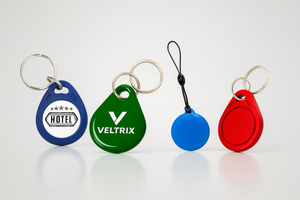
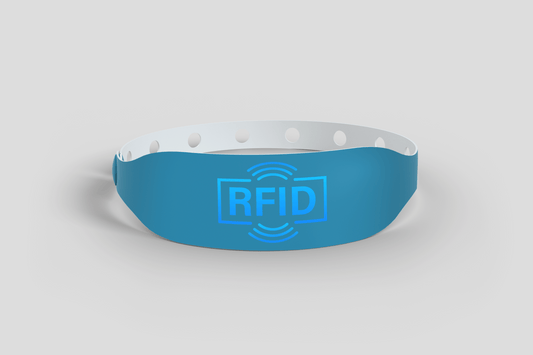
RFID Tags and Wearables: These serve as the physical credentials, such as embedded wristbands or plastic badges, which store a unique digital identification number. Attendees wear these items to interact seamlessly with scanning checkpoints, including features like custom RFID wristbands for added security and convenience.
-
Scanning Hardware: Readers and antennas are thoughtfully installed at entry gates, VIP doors, or point-of-sale terminals. These devices emit the radio frequencies required to power passive chips and capture the reflected data signals.
-
Network Infrastructure: Reliable connectivity is essential for securely transmitting scanned data back to the central server. This setup typically involves Cat6 cabling, Power over Ethernet (PoE+) switches, and robust local routers to help prevent system downtime.
-
Event Management Software: The centralized database and software platform receive the scanned data in real time, instantly validating access rights, processing cashless payments, and updating live crowd analytics dashboards.
Securely managing your attendees' RFID data
Protecting sensitive RFID data is a critical priority for event organizers and corporate venues alike. Modern digital access systems utilize robust cryptographic standards, such as AES-128 encryption, to scramble the information stored on the chip, ensuring it remains unreadable to unauthorized scanning devices. Additionally, mutual authentication protocols guarantee that the wearable tag and the reading device electronically verify each other before any data exchange occurs, effectively blocking potential interception attempts.
To further comply with privacy regulations and prevent data cloning, these systems employ strict data minimization practices. The physical tags themselves do not store raw personal information like names or credit card numbers; instead, they securely hold a randomized token or unique serial number. This token acts as a secure key that links back to a heavily encrypted, centralized database, providing peace of mind that if an attendee loses their wristband, their personal identity and financial information remain completely protected.
Key benefits of upgrading to digital access management
Transitioning from traditional paper ticketing to smart digital access management offers significant operational and experiential advantages. For B2B clients, event agencies, and large-scale organizers, this valuable upgrade fundamentally streamlines site logistics while beautifully elevating the guest experience.
-
Drastically reduced wait times: Scanners process credentials in less than a second, comfortably moving crowds through gates up to 70% faster than manual barcode or paper ticket inspections.
-
Elimination of ticket fraud: Unique, encrypted microchips reliably prevent the copying and counterfeiting commonly associated with standard paper or static QR-code tickets.
-
Cashless payment integration: Wearables can be conveniently linked to digital wallets or pre-paid accounts, allowing guests to purchase food and merchandise with a simple, secure tap.
-
Real-time crowd analytics: Timestamped digital logs provide precise occupancy rates and identify traffic bottlenecks, helping organizers allocate staff dynamically and efficiently.
-
Instant access modifications: Administrators can instantly grant VIP access or deactivate lost passes remotely through the centralized software platform.
Customizing smart wristbands for your festival
Integrating advanced access technology does not require sacrificing the visual appeal or branding of your event. Smart chips can be seamlessly embedded into a variety of high-quality materials, including woven fabric, durable silicone, or eco-friendly paper, allowing organizers to maintain their unique aesthetic identity beautifully. By customizing the exterior of the wristband, festivals and corporate events can easily transform a highly functional security tool into a desirable, branded keepsake for attendees.
For large-scale events, offering custom-designed wearables also aids visual security checks, allowing your dedicated staff to quickly identify different attendee tiers based on band color or pattern before a scan even occurs. Supported by our extensive B2B manufacturing expertise, organizers receive tailored guidance on selecting the ideal combination of materials, chip types, and design elements to perfectly match their operational needs and brand guidelines.
In addition to wristbands, versatile RFID & NFC labels and stickers offer alternate solutions for event branding and security.
Why public institutions trust our access solutions
Public institutions, such as municipal swimming pools, leisure centers, and large corporate facilities, require highly dependable access management gear capable of withstanding heavy daily use. These demanding environments rely on durable, waterproof wearables that can seamlessly handle thousands of repetitive scans without degradation. A proven track record in delivering robust, high-traffic solutions ensures that these valued organizations can consistently maintain secure, efficient, and uninterrupted access control for both staff and the general public day in and day out.
Designing your RFID products with our 3D visualization tool
Navigating the customization process for physical event credentials is made completely effortless through our advanced online design software. Whether you are a professional graphic designer or an administrative purchaser without technical design experience, the intuitive digital platform allows you to effortlessly create and configure your branded access products directly in your browser. This empowers B2B clients to take full control of their event's visual presentation without needing any specialized software.
A key feature of this process is the industry-leading 3D visualization technology, which provides a highly accurate, real-time preview of the customized wristbands, metal tokens, and lanyards. By allowing purchasers to rotate and inspect their designs digitally before placing a large-scale order, the tool removes all guesswork, ensures complete brand alignment, and provides genuine confidence in the final physical product.